May 22, 2017, Reuters
 The top Democrat on the U.S. Senate committee overseeing pensions on Monday asked the U.S. Office of Government Ethics to assess whether President Donald Trump is violating the Constitution and federal bans on conflicts of interest.
Reuters reported on April 26 that public pension funds in at least seven U.S. states periodically send millions of dollars to an investment fund that owns the upscale Trump SoHo Hotel and Condominium in New York City and pays a Trump company to run it, according to a Reuters review of public records.
“Trump may be profiting from the retirement plans of millions of our nation’s public servants,” Senator Patty Murray of Washington state wrote in a letter to Walter Shaub, the director of the Office of Government Ethics, citing the Reuters report.
The Office of Government Ethics is the U.S. agency that oversees conduct within the executive branch and supervises ethics officials to ensure they are preventing conflicts of interest and other violations.
“This looks like exactly the type of monetary flow prohibited by the Constitution,” said the senator.
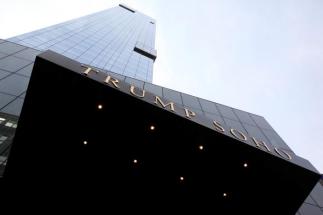 U.S. President Donald Trump is flirting with unparalleled violations of the Constitution by not divesting himself from a hotel management company that benefits financially from public pension fund investments, according to two Democratic U.S. senators.
 Public pension funds in at least seven U.S. states have invested millions of dollars in an investment fund that owns a New York hotel and pays one of President Donald Trump’s companies to run it, according to a Reuters review of public records. That arrangement could put Trump at risk of violating an obscure constitutional clause, some legal experts say.
 The Kuwaiti government could pay up to $60,000 to President Donald Trump’s hotel in Washington for a party it held on Wednesday in an early test of Trump’s promise to turn over profits from such events to the U.S. Treasury.
 Steve Loomis, president of the Cleveland Police Patrolmen’s Association, had a blunt message for Donald Trump during a meeting in September: court-ordered reforms aimed at curbing police abuses in the midwestern city are not working.
 When Bill McAnulty, an elections board chairman in a mostly white North Carolina county, agreed in July to open a Sunday voting site where black church members could cast ballots after services, the reaction was swift: he was labeled a traitor by his fellow Republicans.
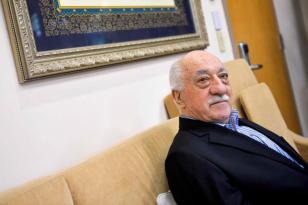 A network of more than 150 U.S. charter schools linked to followers of Fethullah Gulen, the Pennsylvania-based Muslim cleric the Turkish government blames for instigating July’s failed coup, has come under growing financial and legal strain, according to school officials, current and former members of Gulen’s movement, and public records reviewed by Reuters.
 Tents, ladders, coolers, canned goods, tennis balls and bicycle locks are banned in the area surrounding the Republican National Convention in Cleveland.
 Federal election observers can only be sent to five states in this year’s U.S. presidential election, among the smallest deployments since the Voting Rights Act was passed in 1965 to end racial discrimination at the ballot box.
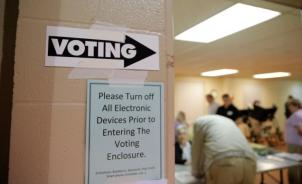 On Election Day in 2014, Joetta Teal went to work at a polling station in Lumberton, North Carolina. Like all poll workers, she was required to stay until voting booths closed, so she decided to cast her own vote there.
 Julia Harte