A Very Istanbul Murder Mystery

January 2013, TimeOut Istanbul

REVIEW: The Serenity Murders, by Mehmet Murat Somer

serenity murders

The Serenity Murders is a quintessentially Istanbul story. It’s hard to imagine another city in the world that could plausibly host the array of characters and events of Mehmet Murat Somer’s latest installment in the Turkish Delight mystery series.

From the square-jawed police officer who transforms into a glitzy diva inside a nightclub to the traditional older parents oblivious to their son’s relationship with another man, from the kooky fortune-tellers and mafiosos thinly disguised as textile manufacturers to the club-owning, computer-hacking, mystery-solving transvestite heroine who tells the story, The Serenity Murders embeds readers in Istanbul from the start and never lets them forget which city they’re in.

The action begins when Burçak Veral, the narrator, appears on a talk show and receives an on-air call from a man threatening to kill someone close to Veral each week until she finds him. Veral quickly realizes that the murderous caller knows her intimately, tracking her life and movements far too closely for comfort.
Continue reading “A Very Istanbul Murder Mystery”

Two New Anthologies of Short Stories by Turkish Women

December 2012, TimeOut Istanbul

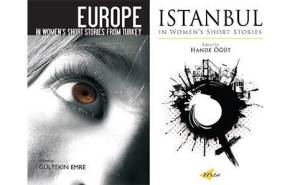
REVIEW: Istanbul in Women’s Short Stories, edited by Hande Öğüt, and Europe in Women’s Short Stories from Turkey, edited by Gültekin Emre

womens-anthologiesFemale authors have risen to prominence – indeed, preeminence – in several literary genres: young adult literature, romance, mystery, memoir… In most countries, however, they’ve mainly established themselves through novels. Compared to the abundance of male writers known for their short stories, few female authors are famous for their literary prowess in the format.

Two recently published English-language short story anthologies aim to showcase Turkey’s contributions to that under-appreciated genre: the female author’s short story. Together, the anthologies boast 50 stories from Turkish writers, well known and obscure, traditional and avant-garde, bringing together long-renowned names with more recent arrivals on Turkey’s literary scene.

Read the rest of this entry >>

Turkey Shocks Africa

Winter 2012/2013, The World Policy Journal

turkey-somalia

From the Winter 2012/2013 issue (“Africa’s Moment”):

Why do Somalis name roads and babies after Turkey’s prime minister? No country had succeeded in helping Somalia until Turkey came along, writes Julia Harte.  With its doctrine of “virtuous power,” Turkey is proving that a strategy of personal engagement—including scholarships, business-to-business contacts, and high-level political visits—can be an effective aid model. Somalia also provides Turkey a toehold in Africa, setting up the onetime heart of the Ottoman Empire to be a future player in the region.

Read full article here

Kurdish Hunger Strike Pushes Turkey Toward The Tipping Point

6 Nov., 2012, Foreign Policy

ImageThe last time Erkan Yildirim visited his imprisoned wife, Pervin, she told him about her recent meeting with their colleague, Fatma. “Pervin said Fatma was very sluggish, that her eyes were slowly darkening, that two or three people had to bring her to and from the bathroom,” says Yildirim, nearly choking on the words. At that time, Fatma had been on a hunger strike for more than a month.

What his wife said next, however, was even more troubling. Pervin informed Yildirim that she was about to begin her own indefinite hunger strike.

Pervin and Fatma are two of the approximately 700 Kurdish prisoners who are currently on hunger strikes across Turkey, though unofficial estimates put the count closer to 1,000. Since September 12, when 64 prisoners in four provinces around Turkey began refusing their regular rations, hundreds more have joined in waves, resulting in the biggest hunger strike ever undertaken by Turkish Kurds. Most of the striking detainees are in prison on disputed charges of supporting the outlawed Union of Communities in Kurdistan (KCK), but they come from a wide range of backgrounds: journalists, college students, teachers, accountants, lawyers, mayors, and even two elected members of parliament.

Read the rest of this entry >>

The “Man on the River” Finishes 5,200-Kilometer Journey in Istanbul

29 Sept., 2012, Green Prophet

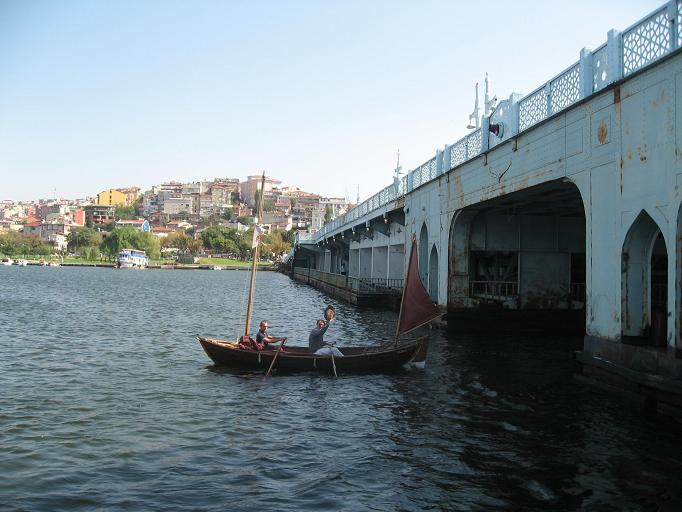
Giacomo de Stefano raises his hat as he rows into Istanbul’s Golden Horn, the final stretch of a trans-Europe experiment in sustainable travel.

It shouldn’t be any surprise that a man who adopted Venice as his hometown loves to be near water. But the way 44-year-old de Stefano decided to raise awareness about this precious resource —traversing Europe in a wooden sailboat, with no budget and  no deadline — has earned him international acclaim over the course of his seventeen-month trip. Green Prophet caught up with him upon his triumphant arrival in Istanbul.

Read the rest of this entry >>

A Hidden Treasure In Tarlabaşı: The Adam Mickiewicz Museum

September 2012, Time Out Istanbul

Tucked down a side street at the base of one of Tarlabaşı’s steep, swerving hills, the Adam Mickiewciz museum is well off the beaten path. Aside from a small plaque above the door, the building does not advertise its presence. Few locals know that they live just steps from the final residence of Poland’s greatest national poet.

The central neighborhood now known as Tarlabaşı lay on the fringes of the city when Mickiewicz came to Constantinople in September of 1855. He was propelled by a grand ambition: organizing a special Polish Legion that could fight alongside Turkish forces to liberate Poland, which had been under imperial Russian control since before his birth. When Mickiewicz arrived in the Ottoman Empire, two regiments consisting of Poles, Balkan Slavs, and Cossacks had already been formed. Mickiewicz visited the camps of two commanding officers there, Władysław Zamoyski and Michał Czajkowski, a.k.a. Sadık Paşa.

Continue reading “A Hidden Treasure In Tarlabaşı: The Adam Mickiewicz Museum”

Turkey’s Other Refugees

28 Aug., 2012, Foreign Policy

With his dazzling blue eyes and angelic smile, 10-month-old Besir lights up any room he’s in. But the only rooms he’s ever seen are the insides of tents and cargo containers. “He’s never lived inside a house,” says his mother, Hasret, 21, bouncing him on her knee.

The steel container we’re sitting in on this baking August day is one in a sea of 1,120, lined up in rows over a vast gravel field in southeastern Turkey. An average of six people live in each container. Water and electricity are sporadically available, and food is scarce. Most families know they have lost their houses and belongings forever. Most children don’t have any toys, or even a change of clothing. Few people know how or when they will be able to move out of the camp.

In the mind-numbing heat of the container city, mingled with pleas for aid and information, there issues a collective lament: “Our government has forsaken us.”

These people aren’t fleeing the violence in Syria, however. They are locals of Van province, and have been homeless for the past 10 months, since two massive earthquakes struck their city last autumn, killing 600 people and wounding 4,000 more. Currently, some 67,000 individuals live in Van’s 33 container cities.

Read the rest of this entry >>

Turkish Cabinet Invokes Wartime Law To Seize Property For Hydro Projects

13 August, 2012, Green Prophet
The more than 20 hydroelectric projects that Turkey has built on the Tigris and Euphrates Rivers have been sharply criticized for displacing populations and harming the local environment.

Now it’s even easier for hydro companies to build destructive dams in Turkey. Real estate for 13 different hydroelectric projects in 12 provinces can now be seized at any time by Turkey’s Energy Market Regulatory Agency (EPDK) and State Waterworks Authority (DSİ), thanks to a recent decision by the prime minister’s cabinet, as reported in Bianet, Turkey’s independent media agency.

Read the rest of this entry >>

Two Summertime Reads

August 2012, TimeOut Istanbul (print edition only)

REVIEW: Prayers Stay the Same, by Tuna Kiremitçi, trans. Çiğdem Aksoy & A Momentary Delay, by Reha Çamuroğlu, trans. Çiğdem A. Kobu

Summertime calls for a certain type of book: not too dense to weigh down a day at the beach, but not so vapid that it loses your interest after the first chapter. If you’re seeking a slim, absorbing novel that will still pack a literary punch, consider these works by two prominent but little-translated Turkish novelists. Under 200 pages each, they’ll transport you away from the August heat of Istanbul and keep your attention until you want to return.

Continue reading “Two Summertime Reads”

Two Jewish-Turkish Perspectives On Istanbul

July 2012, TimeOut Istanbul (print edition only)

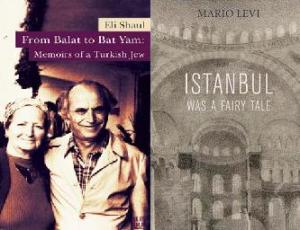
REVIEW: From Balat to Bat Yam: Memoirs of a Turkish Jew, by Eli Shaul, ed. Rıfat N. Balı, trans. Michael McGaha & Istanbul Was A Fairy Tale, by Mario Levi, trans. Ender Gürol

From Balat to Bat Yam: Memoirs of a Turkish Jew

Eli Shaul grew up in an Istanbul where Turks, Greeks, Jews, and Armenians gathered in coffeehouses and taverns to exchange jokes, stories, and plenty of non-hostile ethnic or religious taunts. In his Istanbul, neighborhood news was declaimed in the streets by public watchmen, Kâğıthane was a wooded picnic destination, and fires were extinguished by mobile pumps that volunteer firemen carried by hand.

Shaul was born into a Turkish Jewish family in 1916, in the last embers of the Ottoman empire. He came of age as the Turkish Republic struggled through its own turbulent adolescence, characterized by ugly rashes of nationalism, rebellious urges in different parts of the country, and spurts of growth toward a multi-party system.

Through Shaul’s eyes, these changes manifested themselves in the increasingly discriminatory treatment he encountered as he grew up.

Continue reading “Two Jewish-Turkish Perspectives On Istanbul”