Flagship military university hired foreign officers linked to human rights abuses in Latin America

Mar. 11, 2015, The Center for Public Integrity / The Daily Beast

Senior U.S. officials say professors should have been more carefully vetted
Colombia

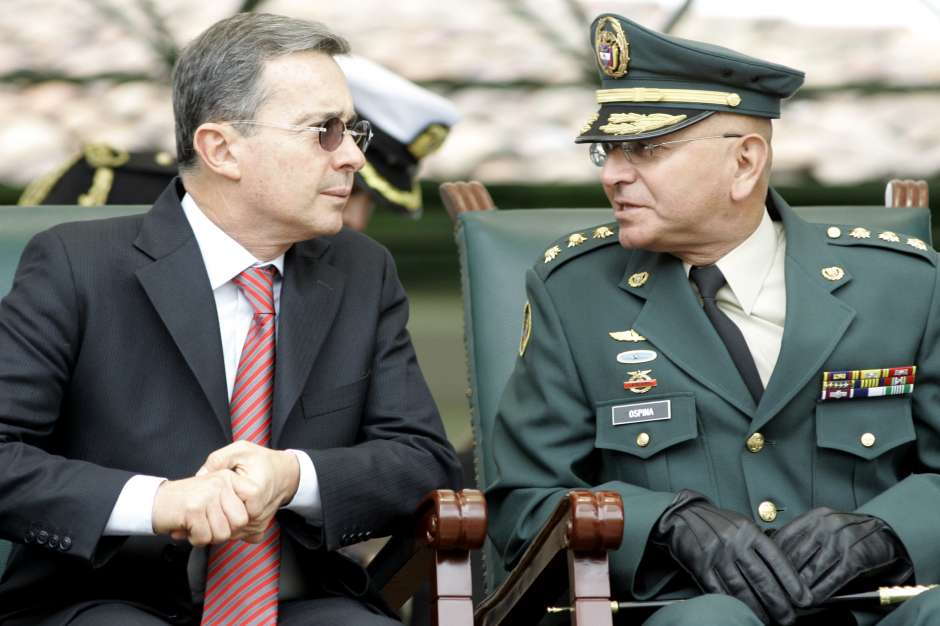
Carlos Alberto Ospina Ovalle was deep in the Colombian mountains in the autumn of 1997, directing an Army brigade in a major offensive against a group that Washington formally designated that year as terrorists, the Revolutionary Armed Forces of Colombia, or FARC. He achieved some battlefield successes, and five years later, he was appointed chief of the Colombian Armed Forces.

Flash forward to earlier this month: Ospina Ovalle was in a military classroom in Washington, lecturing at the National Defense University to an elite group of U.S. and foreign military officers and civilians from a podium set before a row of Latin American flags. Colleagues at the school, which is chartered by the Joint Chiefs of Staff, say Ospina Ovalle is particularly respected there for his experience under fire and his deep knowledge of counterterrorism strategy.

In recent weeks, however, a less heroic portrayal of Ospina’s past has caught up with him, provoking controversy over his presence in the United States among lawmakers on Capitol Hill and within the Obama administration, and new expressions of concern from Washington’s community of Latin American specialists.

The controversy concerns allegations that back in 1997, Ospina’s Fourth Brigade allowed a pro-government militia to sack the village of El Aro in northern Colombia, brutally killing several people, including some children, and leaving others missing.
Read the rest of this entry >>

Burning Trash and Money in Afghanistan

Feb. 12, 2014, The Center for Public Integrity / Foreign Policy

U.S. troops in Afghanistan burned waste in hazardous open pits — against Pentagon regulations — while safer (but defective) incinerators sat idle.

afghanburnpit

Bobby Elesky, who worked as a civilian Defense Department contractor at Kandahar Airfield in Afghanistan from January 2004 until February 2005, recalls the smelly, smoky burn pit there being the size of nearly three football fields.

Trash would be thrown in as the evenings approached, he recalled in a phone conversation, and then burn and smolder through the next day. “Everything got thrown in there,” he said. “Tires, batteries, plastic water bottles. Even complete vehicles.”

The U.S. military knew the burn pits at its Afghan bases posed health risks to its personnel, and spent more than $20 million building incinerators meant to dispose of the mountains of trash being produced by its soldiers in the country every day: 440 tons at the height of the surge.

Read the rest of this entry >>

The Pentagon’s Slush Fund

Dec. 11, 2014, The Center for Public Integrity / Politico Magazine

In the federal budget, emergency wartime expenses are the new normal.

141211_harte_slushfund_ap

What does an $810 million U.S. defense “initiative” to “reassure” Europe in the wake of Vladimir Putin’s Crimean land grab have to do with emergency war needs in Afghanistan and Iraq? Absolutely nothing. So why does that hefty sum appear in the military’s budget, now pending on Capitol Hill, meant to support operations in those two Middle Eastern countries?

This is not how America’s war budget—otherwise known as the Overseas Contingency Operations (OCO) fund—is supposed to work. The White House in 2011 said that the OCO, originally established in 2001 under a different name, was just for “temporary and emergency requirements” for fighting in Iraq and Afghanistan. Now, many experts are saying that its continued use is emblematic of a five-year collapse in Washington fiscal discipline.

The OCO budget isn’t subject to spending limits that cap the base defense budget for each of the next seven years; it’s often omitted altogether from tallies of how much the military spends each year; and, as an “emergency” fund, it’s subject to much less scrutiny than the rest of what the military asks for.

Read the rest of this entry >>

How US Companies Help Central Asian Autocrats Eavesdrop

Nov. 21, 2014, The Center for Public Integrity / TIME

world

American companies are supplying technology that the governments of Kazakhstan and Uzbekistan are using to spy on their citizens’ communications and clamp down on dissent, according to a new report from the U.K.-based advocacy group Privacy International.

Verint Systems, a manufacturer of surveillance systems headquartered in Melville, N.Y., has sold software and hardware to Kazakhstan and Uzbekistan that is capable of mass interception of telephone, mobile, and Internet networks, the group alleged in its Nov. 20 report. It also provided the training and technical support needed to run them, the report said.

Verint, which claims customers in 180 nations, in turn sought decryption technology made by a firm in California, Netronome, as it helped the Uzbek government attempt to crack the encryption used by Gmail, Facebook, and other popular sites, according to the report.

Read the rest of this entry >>

The Fruits Of A $60 Billion U.S. Expenditure In Afghanistan Are Now Secret

Oct. 30, 2014, The Center for Public Integrity / The WorldPost / Global Post

afghan forcesA month before U.S. Marines and British military forces began their current withdrawal from Afghanistan’s Helmand province, the NATO-led International Security Assistance Force (ISAF) in Afghanistan abruptly classified its assessment of the fighting abilities of the Afghan army and police forces, which the U.S. has spent an estimated $61.5 billion to build up.

Portions of these assessments have been released to the public the past nine years. But on Oct. 3, ISAF’s Joint Command told independent federal auditors of the reconstruction effort that the office of the Special Inspector General for Afghanistan Reconstruction by email that the latest ratings now are classified in their entirety.

ISAF’s Joint Command decided that sections of the reports that discuss the capabilities of the Afghan army or police force should be classified at the “Restricted” level, while an overall tally of the number of units deemed capable of meeting leadership, combat, training, and other requirements was given the higher classification of “SECRET,” according to an email from the command, obtained by CPI.

Read the rest of this entry >>


Investigators find Islamic State used ammo made in 21 countries, including America

Oct. 6, 2014, The Center for Public Integrity / Foreign Policy / McClatchy

A new report from an arms tracking group highlights how readily arms shipped to the Middle East are transferred from allied groups to hostile ones

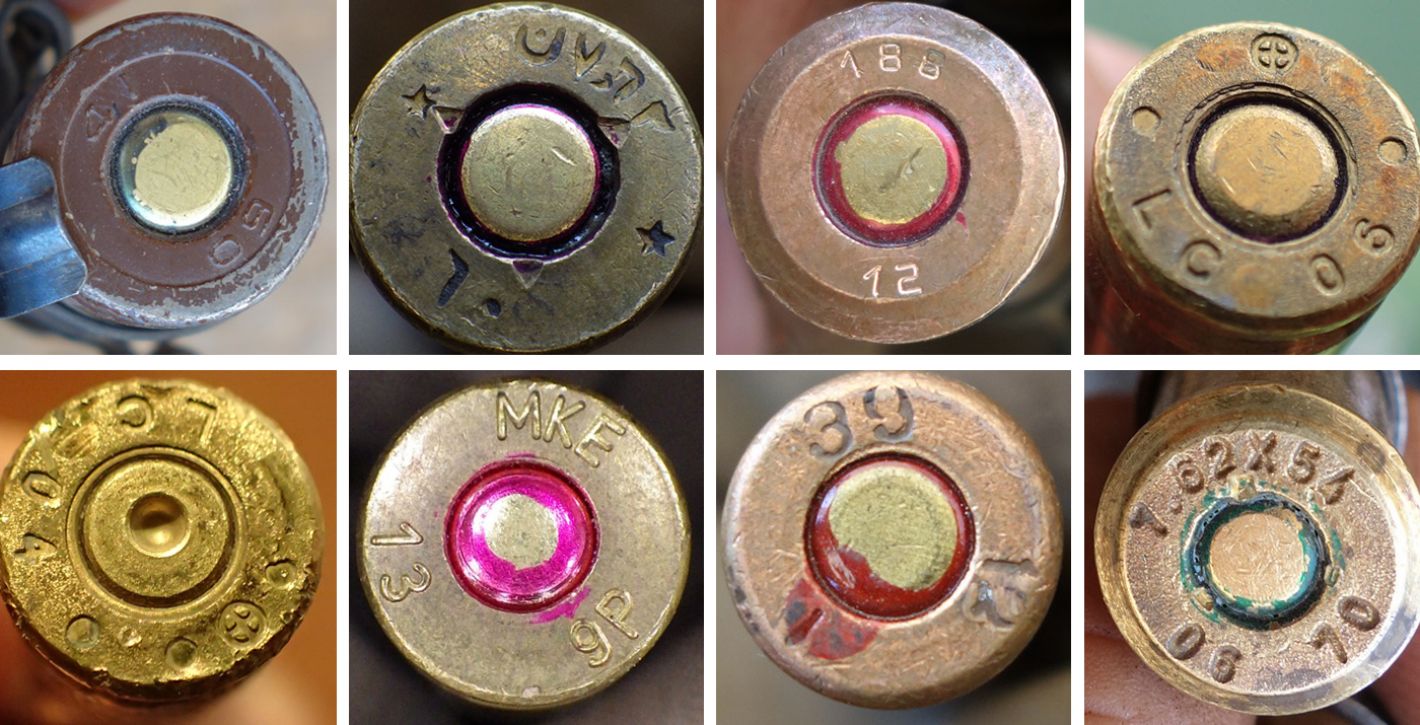
bulletAn independent arms monitoring group has collected evidence that fighters in the Middle Eastern extremist group known as the Islamic State, labeled a “network of death” by President Obama, are using weapons and ammunition manufactured in at least 21 different countries, including China, Russia, and the United States.

The group’s report, released Oct. 6, indicates that the Islamic State’s relatively newly-formed force has had little difficulty tapping into the huge pool of armaments fueling the conflicts in Iraq and Syria, supplied not only by the world’s big powers but also by up-and-coming exporters such as Sudan.

Much of the Islamic State arms and ammunition were captured on the battlefield, but intelligence reports have suggested that the group’s income from oil sales and other sources is high enough to finance purchases of additional weapons directly from the companies and dealers that routinely profit from strife in the Middle East.

Read the rest of this entry >>

Disclosure Rules on Dangerous Chemicals Fuel Political Fight in Texas

Aug. 15, 2014, The Wall Street Journal

More than a year after a fertilizer explosion in West, Texas, killed 15 people, it is now harder for state residents to learn whether hazardous chemicals are stored near their homes, an issue that is stoking political debate leading up to the Texas gubernatorial election.

Texas used to periodically release information about the nearly 70,000 manufacturing facilities that store hazardous chemicals in the state, in accordance with federal and Texas right-to-know laws. But in June, the office of Texas Attorney General Greg Abbott, the Republican nominee for governor, ruled that Texas no longer could release the information because of state homeland-security laws.

Read the rest of this entry >>

Oklahoma Governor Shows Support for Testing a Form of Medical Marijuana

Aug. 13, 2014, The Wall Street Journal

Oklahoma Gov. Mary Fallin on Wednesday called on state lawmakers to allow medical trials exploring the use of cannabidiol oil, a nonpsychoactive component of marijuana, for treating disorders that cause seizures and strokes in young children.

If lawmakers back the Republican governor’s effort, Oklahoma would join a string of conservative-leaning states that have recently sanctioned limited use of cannabidiol oil, or CBD. Ten states, including Alabama, Kentucky and Mississippi, legalized some form of CBD this year.

The governor said she is still opposed to legalizing pot for recreational and most medical uses.

Read the rest of this entry >>

Texas City Goes High-Tech to Limit Water Loss

Aug. 4, 2014, The Wall Street Journal

As the Southwest U.S. grapples with a devastating drought, one Texas city is undertaking an experiment to conserve its rapidly depleting water supply.

Wichita Falls is mixing a biodegradable polymer with water and applying it to the surface of the Lake Arrowhead reservoir in hopes of reducing the rate of evaporation by about 10%.

The particles—made from hydrated lime and an extract of palm oil—form a molecular net that impedes water from escaping into the air.

Read the rest of this entry >>

Open-Carry Push Has Texas in Its Sights

July 14, 2014, The Wall Street Journal

opencarrygraphic

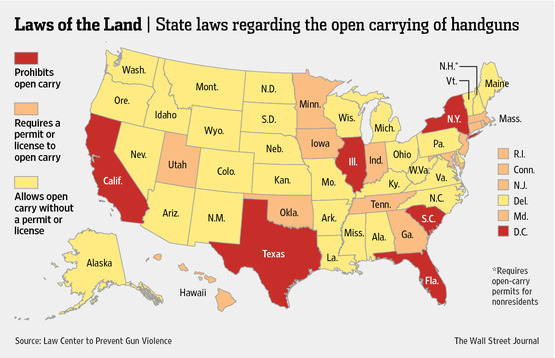
Activists bringing rifles into Texas chain stores in recent weeks have put the state at the center of a national fight over “open-carry” laws, reinforcing many Americans’ perception of the Lone Star State as a haven for gun rights.

In reality, Texas has one of the nation’s more restrictive laws on the carrying of handguns—a policy that firearms-rights groups and state legislators are fighting to change. Those efforts, however, have been unsuccessful: Legislation in recent years proposing to allow people to carry handguns visibly has stalled.

Now, some Texas gun-rights supporters are concerned that negative publicity over the recent protests will make their struggle even tougher.

Read the rest of this article >>